Where are the politics of Bafana Bafana?
While most sports in South Africa are inseparable from the national political imagination, men's football manages to stay relatively removed.
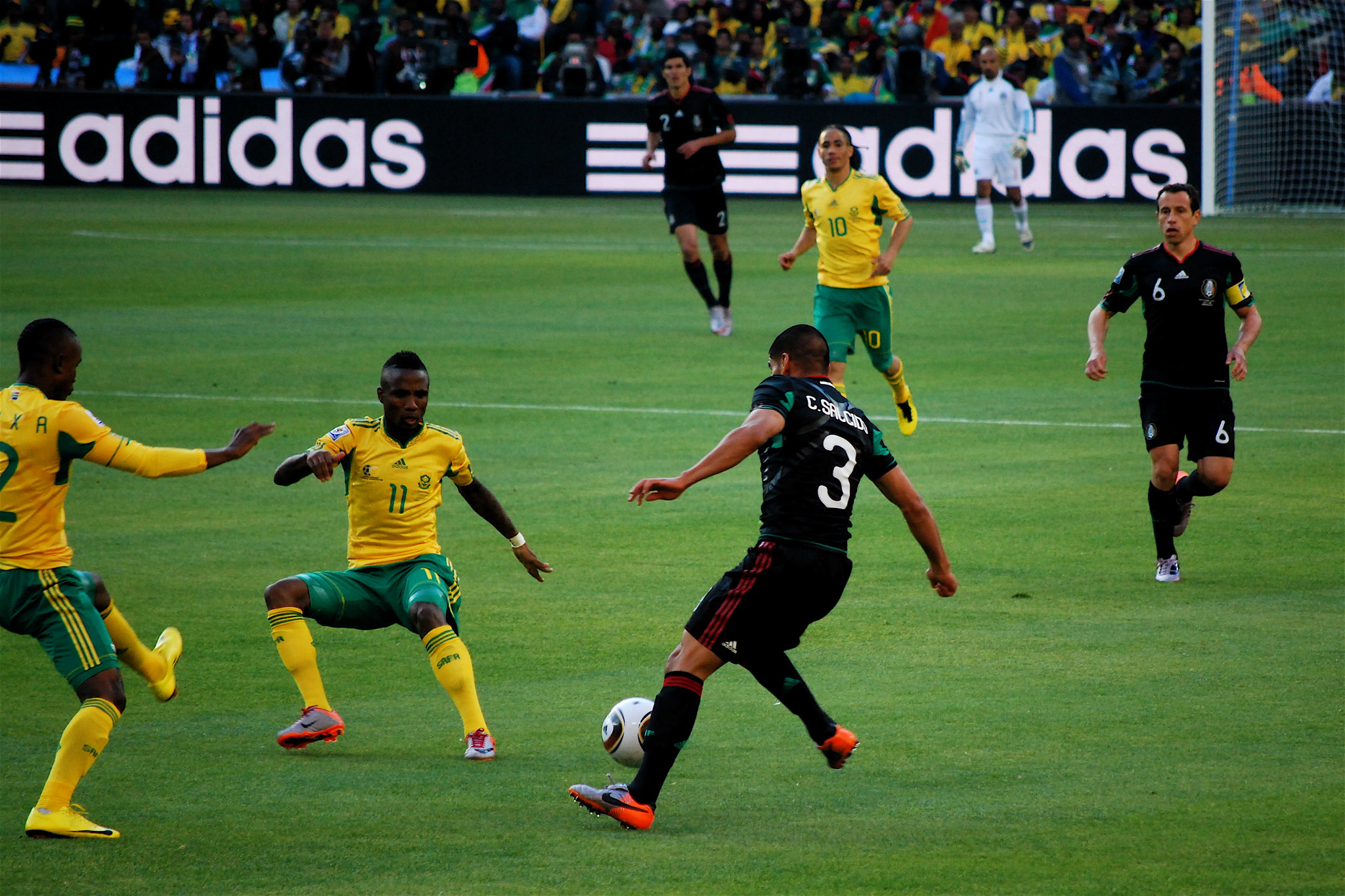
In South Africa, sport is rarely separate from politics. Across the country’s major codes, athletic competition functions as a site where histories of struggle, identity, and inequality are constantly negotiated. This is particularly true in African football, where the game has long carried political meaning from resistance and liberation to national belonging.
Yet South Africa’s men’s national football team, Bafana Bafana, occupies a peculiar position. Despite football being the country’s most popular sport, the national team appears unusually insulated from political expectation. In a society saturated with political discourse, Bafana exists in a parallel universe, largely free from the moral and ideological scrutiny applied to other sporting institutions.
Rugby offers the clearest contrast. Since Nelson Mandela reclaimed the Springboks in 1995 as a symbol of the Rainbow Nation, the team has been burdened with representing both the promise and the failure of post-apartheid reconciliation. Every era of Springbok success or controversy becomes a referendum on race, unity, and inequality, amplified by fans, administrators, and players alike.
Cricket South Africa is similarly entangled in politics. From debates around Black Lives Matter and taking the knee, to controversies involving Israel, Palestine and Afghanistan’s treatment of women, the sport is repeatedly pulled into national and global political currents. Even when CSA’s positions appear inconsistent, the expectation that cricket must respond politically remains firmly in place.
Women’s sport, meanwhile, is structurally forced into politics. Across disciplines, women athletes must fight wage gaps, unequal resources, and questions of legitimacy simply to compete. The exclusion of Caster Semenya by World Athletics underscores how these struggles extend into race and gender itself, where Black women are denied recognition within the very categories meant to include them.
Bafana Bafana, by contrast, consistently avoids such reckonings. Ahead of AFCON, head coach Hugo Broos made a racist and sexist remark about Mbekezeli Mbokazi, framing Blackness as a deficiency in need of correction through whiteness. While the comment reflects a familiar anti-Black ideological logic, it failed to provoke sustained outrage or institutional consequence.
The difference becomes clearer when compared with rugby. A similar remark by a Springbok coach would dominate headlines and overshadow tournament results, just as past incidents such as Makazole Mapimpi’s exclusion from a post-match huddle in 2019—sparked national debates about race. Football, however, absorbs controversy with remarkable ease.
This political aloofness extends to international solidarity. Despite South Africa’s case against Israel at the ICJ, Bafana Bafana has remained silent. SAFA’s limited gesture hosting Palestine in exhibition matches with an invitational squad—avoided involving the national team. Calls from unions, civil society, and former players to take a stronger stand have been ignored, revealing that politics matter most where refusal begins.
Ultimately, Bafana’s insulation reflects institutional self-interest and a broader chauvinistic culture. Rewarded regardless of performance and spared from moral interrogation, the team is not expected to educate, reconcile, or transform. Unlike rugby, cricket, or women’s sport, Bafana Bafana is celebrated simply for existing—and in that exemption lies a quiet but powerful politics of its own.
Sources & References
Disclaimer
ASIO publishes information for public interest, research, and educational purposes. Allegations reported are not determinations of guilt. All individuals and organizations are presumed innocent until proven otherwise by a competent legal authority.