Experience vs.
Credentials: What Nigerian Basketball Needs in Its Next NBBF President
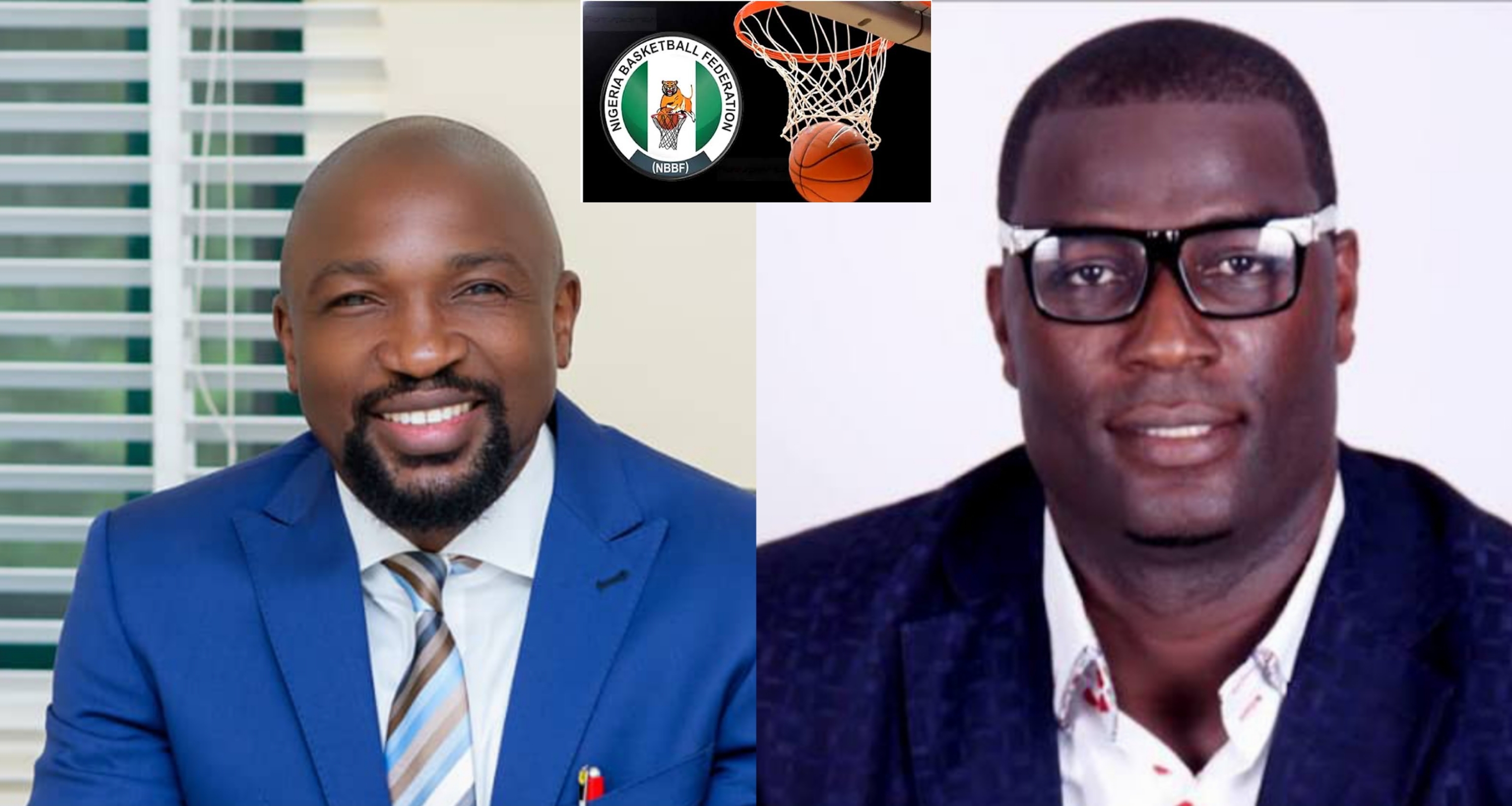
As Nigerian basketball approaches the 2026 general elections amid ongoing governance crisis, two names dominate discussions: Igoche Mark and Olumide Oyedeji. While both bring distinct credentials, the skills needed to run a sports federation differ vastly from those required to excel on the court. This raises a fundamental question about what Nigerian basketball truly needs in its next leader.
Olumide Oyedeji's resume is impressive; a former NBA player drafted 42nd overall in 2000, he played 93 games for the Seattle SuperSonics, led Nigeria to its first AfroBasket trophy in 2015, and became the first African to compete in all major global basketball tournaments.
His FIBA Players Commission appointment from 2014 to 2019 cemented his international standing. Igoche Mark took a different path, investing his energy in building basketball from the ground up as initiator of the Mark D' Ball Basketball Championship and founder of Mark Mentors basketball team, working behind the scenes to expand basketball's footprint across Nigeria.
History across global sports shows that stellar playing careers rarely translate automatically to effective sports administration. The skills that make exceptional players individual excellence, competitive drive, tactical awareness differ fundamentally from those required for sports governance, stakeholder management, financial planning and institutional development.
He's (Mark) trajectory reveals years spent understanding sports administration mechanics through organizing championships, grappling with sponsorship acquisition, event logistics, stakeholder coordination, and grassroots engagement precisely the competencies running the NBBF demands daily.
Mark's sustained commitment through the annual Mark D' Ball Championship demonstrates patience, consistency, and understanding that basketball development is a marathon, not a sprint. His hands-on involvement in championship execution shows a willingness to do the unglamorous work of institution-building.
Furthermore, his recent praise for the National Sports Commission's intervention in the NBBF tenure crisis demonstrates political awareness and diplomatic skill, with his 2022 platform emphasizing reconciliation, stakeholder unity and athlete welfare clear evidence he understands the NBBF's crisis is political and structural, not technical.
The narrative around international connections warrants balanced examination. While Oyedeji's NBA career and FIBA appointment are highlighted as assets, there are some quarters that believe his international connections have only served his personal endeavors and not the Nigerian basketball ecosystem. Supporters point to his foundation's reach across south west Nigerian states and basketball programs as evidence of broader impact, while critics question the absence of federation-wide FIBA or NBA partnership programs.
Mark, despite not playing professionally, has cultivated a network of national and international business conglomerates including the NBA and Basketball Africa League, which his supporters say he's leveraged for tournament sponsorships and youth development that benefit multiple stakeholders.
Oyedeji's supporters note that his foundation has produced over multiple scholarships and engaged youths, while his presidency of Dolphins Basketball Club demonstrates hands-on team management experience. However, critics raise questions about the visibility of FIBA development programs, NBA grassroots initiatives, or international coaching exchanges that might have emerged from his global network.
They argue that federation-level impact differs from foundation or club-level achievements. The debate centers on whether connections have been maximized for collective basketball development or remained primarily within specific organizational spheres.
Mark's supporters point to his championships as platforms benefiting multiple stakeholders providing exposure for unknown players, opportunities for coaches, and engagement for sponsors. They argue his business-oriented approach has created accessible pathways into basketball.
On the other hand, Oyedeji's advocates emphasize his global credibility and the doors his NBA and FIBA relationships could open at the federation level, noting that his experience hasn't yet been tested in NBBF leadership. The central question remains whether Nigerian basketball prioritizes proven administrative execution or international prestige with developmental potential.
Both candidates bring distinct value propositions. Mark's administrative track record and grassroots persistence demonstrate understanding of federation operations through years of hands-on tournament management and stakeholder coordination. Oyedeji's playing pedigree, international credibility, and elite-level basketball experience offer potential access to global basketball networks and legitimacy in international forums.
The choice represents different theories of leadership: tested administrative competence versus high-level playing experience with untapped international connections.
As the 2026 elections approach, voters face competing visions for Nigerian basketball's future. One path emphasizes administrative experience, proven ability to organize sustained programs, and existing partnerships with business stakeholders. The other offers international basketball credibility, potential FIBA and NBA network activation, and the prestige of elite playing experience.
Nigerian basketball needs both governance competence and global connections; The question is which foundation proves more critical for emerging from years of institutional crisis. The decision may shape whether the NBBF achieves stability and growth or continues navigating governance challenges.